


If a commercial door will not latch, check for a visible obstruction, then arrange an assessment of the door alignment, latch, strike and closer. Do not solve the problem by chaining an exit, taping over the latch or increasing closing force at random. The door needs to secure the premises while allowing the required safe exit.
A storefront door can look closed and still fail to engage. That matters at closing time, but it also matters during business hours when staff and customers rely on predictable operation. This guide helps Denver business owners describe the fault and decide what needs professional attention.
First decide whether the door is safe to use
Notify the responsible manager as soon as the problem is discovered. Keep the exit route clear. If the door prevents people leaving normally, treat it as urgent and follow the property’s emergency procedures. Do not direct people through a known unsafe door or improvise a locking arrangement while the space is occupied.
For a door that opens normally but will not secure, arrange prompt repair and an appropriate temporary security plan with the property manager. A closed-looking door is not proof of a latched door. If there is broken glass, a loose door leaf or visible structural damage, keep people away from the hazard and seek suitable professional help.
Record what happens before changing anything
Observe the door through a normal opening and closing cycle when it is safe to do so. Does it stop short? Does it hit the frame? Does the latch touch the strike but fail to enter? Is the problem constant, or does it occur only in afternoon sun or when ventilation equipment is running?
| Observed symptom | Possible area to inspect |
|---|---|
| Door rubs at the top or floor | Hinges, pivots, frame or door alignment |
| Latch meets the edge of the strike | Alignment, loose hardware or strike position |
| Door stops before reaching the frame | Obstruction, seals, closer or air pressure |
| Door slams but does not stay closed | Latch engagement, rebound or closer settings |
| Push bar or handle does not return normally | Exit-device or lock mechanism |
These are diagnostic clues, not a remote diagnosis. A short video of the closing cycle can help a technician understand the issue. Avoid including customers, access codes or sensitive areas in the recording.
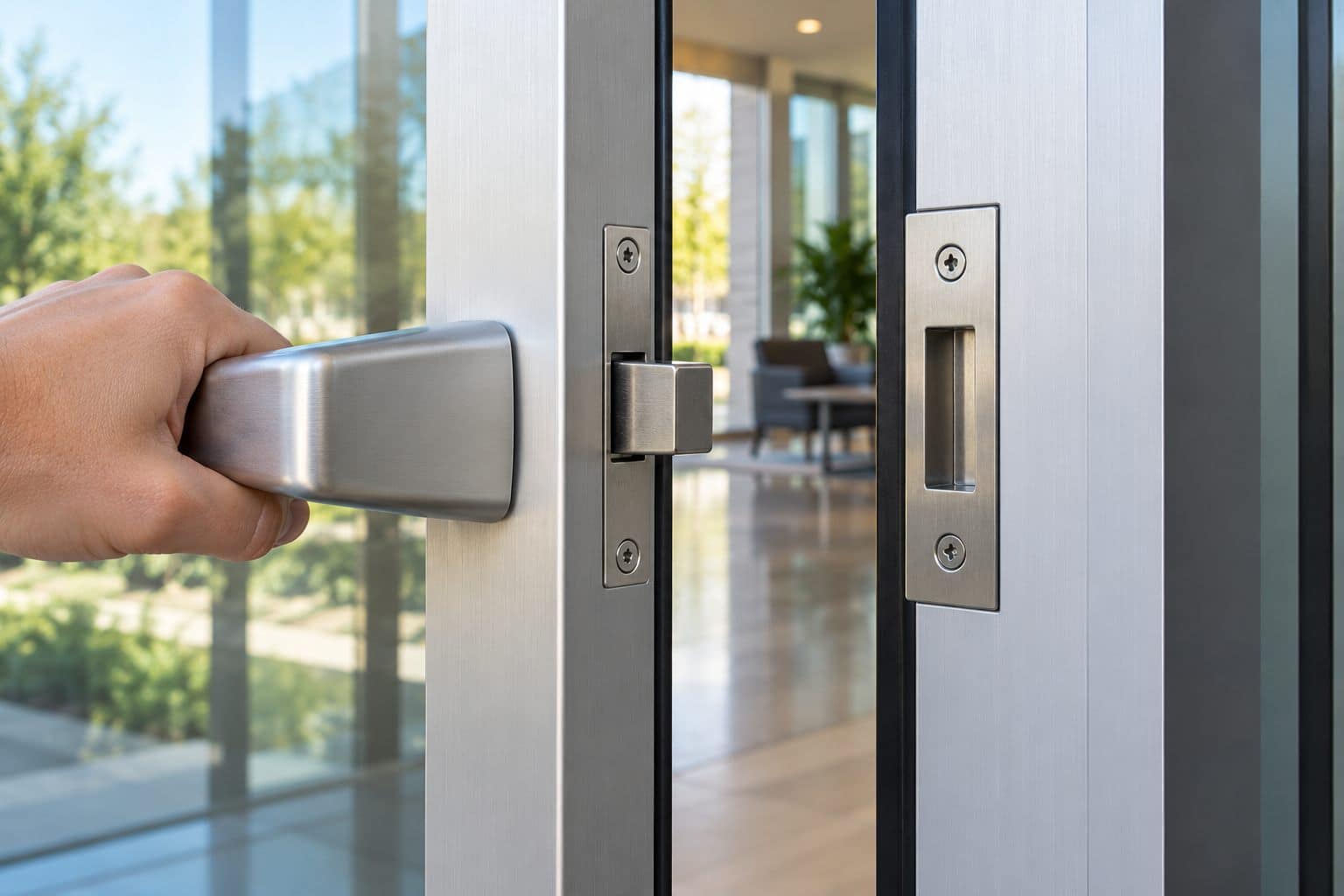
Safe checks a manager can make
Look for a displaced floor mat, debris at the threshold or something caught between the door and frame. Remove ordinary loose obstructions if doing so is safe. Look for loose fasteners, fresh scrape marks and damaged seals, but leave adjustments to the appropriate technician when the assembly, fire rating or access-control arrangement is uncertain.
Check whether the latch actually engages after the door closes. Do not slam the door repeatedly or pull hard on fragile hardware. If the lock works with the door open but fails when the door closes, report that distinction: replacing the cylinder alone may not address the problem.
Our commercial locksmith service in Denver covers business lock and access needs. Explain whether the affected opening is a public entrance, a staff door, a shared building entrance or a designated exit so the right assessment can be arranged.
Why heat, weather and building pressure can expose a fault
Door and frame materials move with conditions, and a door with very little clearance can become less forgiving. Sun exposure, worn pivots, compressed seals and existing misalignment may combine to make an intermittent problem more noticeable. A fault that appears on warm afternoons should be documented rather than dismissed as “just the weather.”
Air pressure can also affect a closer’s ability to bring the door to the latch. Record whether the behavior changes when other doors open or building ventilation operates. The solution may require coordination between the door technician and building maintenance. Do not alter a ventilation system solely to make a door latch.
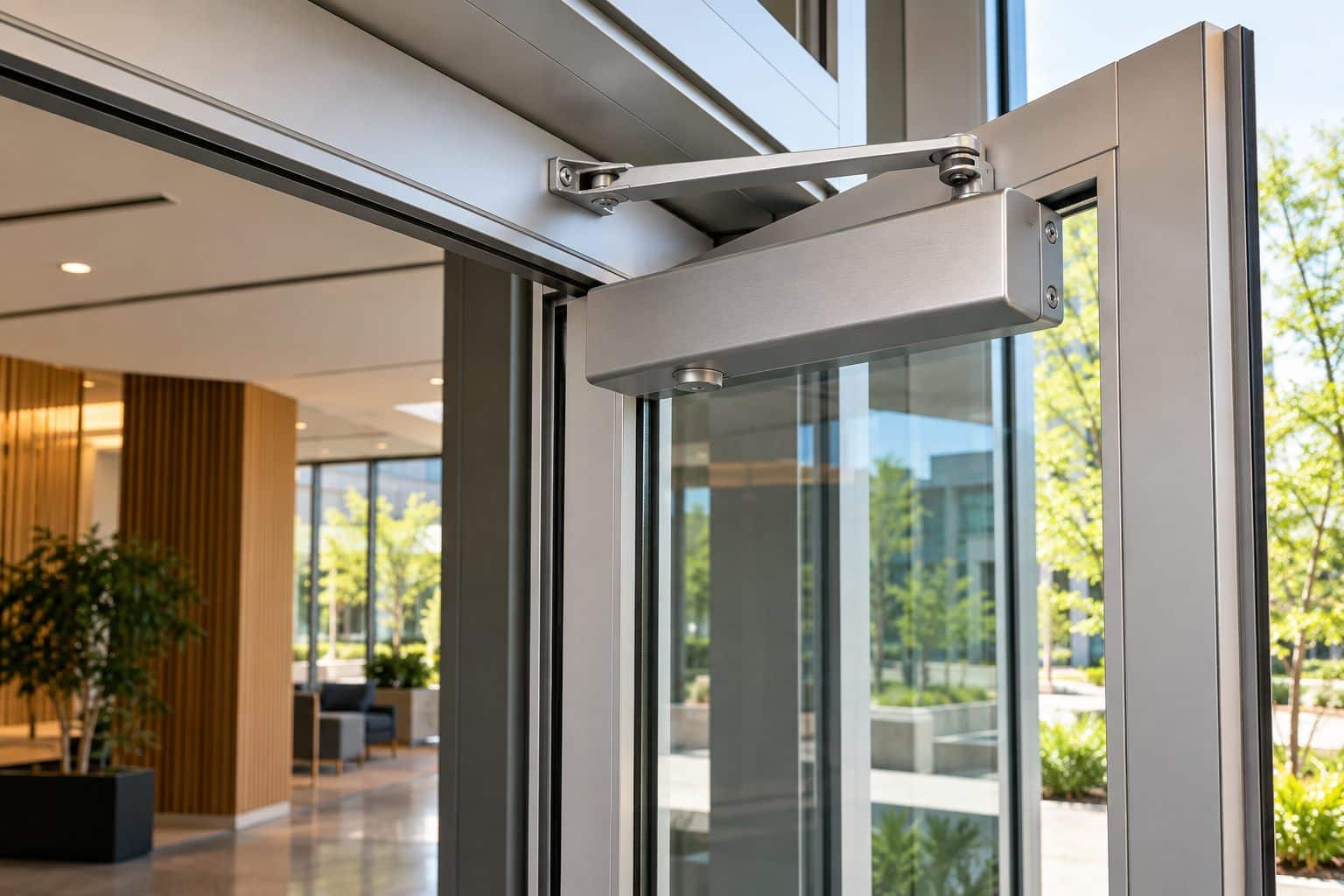
Why turning up the closer is not a complete repair
The closer controls movement, but it cannot correct every alignment or latch problem. Adding force may make the door harder to open, while changing speed can create slamming or pinch hazards. The appropriate settings depend on the closer, door assembly, accessibility requirements and applicable building conditions.
A proper service visit should examine hinges or pivots, mounting security, latch and strike engagement, closer condition and any connected access-control hardware. For fire-rated openings, compatible components and the assembly’s requirements matter. Do not drill, file or replace parts without confirming that the proposed work is suitable.
Keep safe exit and building requirements in view
The Denver Fire Department’s fire-safety inspection brochure identifies exit condition and exit-door operation among the items inspected. It is a useful local explanation of why door operation deserves attention, not a substitute for a site-specific code determination.
Ask the property manager or relevant authority about requirements for the particular occupancy and opening. A locksmith repair does not by itself establish that every aspect of a building is compliant. If the problem also involves lost or uncontrolled keys, rekeying or changing a lock is a separate decision from correcting a door that will not latch.
What to ask for when booking the repair
Provide the property address, door material, symptoms and any visible hardware brand. Mention whether the door is connected to a card reader, alarm or automatic operator. Ask for an estimate that separates diagnosis, labor and any replacement hardware. Confirm who can authorize the work, especially in a leased or shared building.
After repair, ask for a demonstration of smooth opening, controlled closing and consistent latching. Test the intended access method and check that people can leave as required. Record the work and report recurring symptoms promptly. Our emergency locksmith services are available for urgent lock problems; availability and the appropriate response should be confirmed by phone.
Frequently asked questions
Why does my storefront door close but not lock?
The latch may not be reaching or engaging the strike, or the locking mechanism may have a fault. A door that appears shut can still be unsecured. Check for obvious obstructions and describe whether the latch moves normally. Have the complete opening assessed before assuming a new key cylinder will fix it.
Can hot weather make a commercial door stop latching?
Temperature-related movement can expose limited clearance or existing alignment problems. It is one possible factor, not a diagnosis. Note the time of day, sun exposure and where the door rubs. A technician can compare the symptoms with hinge, pivot, seal and frame condition.
Should I adjust the door closer myself?
Only someone competent with the specific assembly should adjust it. Incorrect changes can produce slamming, poor latching or excessive opening resistance. If the door is an exit, fire-rated or connected to an operator, the consequences extend beyond convenience. Use the manufacturer’s instructions and appropriate professional assessment.
Can we tape the latch back until the repair?
Do not use tape to defeat a latch as a routine workaround. It can leave the premises unsecured and may compromise the intended function of the opening. Ask the responsible manager and service provider for a temporary plan that preserves safe exit and the door’s required operation.
Does every latching problem require a new lock?
No. Obstructions, loose hardware, alignment, seals, closer condition and building pressure can all affect latching. Replacement may be appropriate for worn or damaged components, but the cause should be identified first. Ask what failed and how the proposed repair addresses that failure.
Who should arrange repairs in a leased Denver storefront?
Notify the landlord or property manager and check the lease’s maintenance process. Identify the person authorized to approve work and retain the service record. For an immediate safety problem, follow the building’s emergency procedures rather than waiting for an ordinary maintenance appointment.
To discuss the door and arrange an assessment, contact Advanced Locksmith at 720 633 7444. Images are AI-generated illustrations, not photographs of actual customer premises.
