


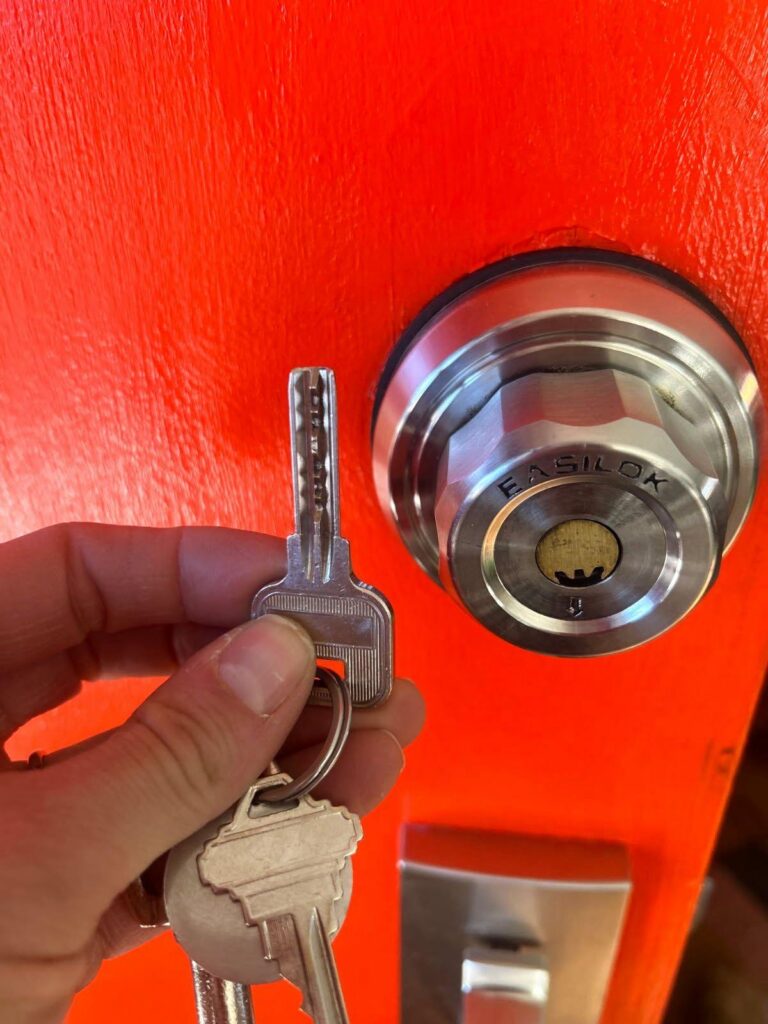
Not long ago, a Denver homeowner called us with three specific concerns. A key that couldn’t be duplicated at a hardware store. A lock that couldn’t be picked. And something that would hold up against drilling. Those are exactly the right questions to ask, and they led us to one solution: a professionally installed high-security deadbolt.
If you’ve been thinking along the same lines, this post walks you through what that upgrade looks like, why it matters in Denver specifically, and how a professional locksmith in Denver can solve problems that a trip to the hardware store simply can’t.
Denver’s Property Crime Reality Makes This Upgrade Worth Thinking About
Denver’s property crime rate is notably higher than the national average. According to data from the Denver Police Department, the city recorded thousands of burglaries in 2024 alone, with forced entry accounting for a significant share of those incidents. Neighborhoods from Five Points to East Colfax and West Highland see regular activity, and no part of the city is completely immune.
The good news is that most residential break-ins are crimes of opportunity. Burglars tend to target homes that look easy to enter quickly. A high-security deadbolt is one of the most direct ways to change that calculation. When an intruder encounters a lock that resists their standard toolkit, they typically move on.
That’s the real-world value of what we installed for our customer, and it’s why more Denver residents, both homeowners and commercial property managers, are making this call.
What Makes a Deadbolt “High-Security”?
Not every deadbolt sold at a big-box store deserves the label. A true high-security deadbolt earns that name through specific engineering features that address the three most common attack methods: picking, drilling, and unauthorized key duplication.
Here’s what separates a genuine high-security lock from a standard one:
- Pick and bump resistance: High-security cylinders use advanced pin systems, sidebar mechanisms, or rotating elements that defeat standard lock picks and bump keys, the tools most frequently used in quick break-in attempts.
- Drill resistance: Hardened steel inserts, anti-drill pins, and reinforced collars protect the cylinder from power tool attacks, which are faster and more destructive than picking.
- Key control: The keys are cut using proprietary, patented keyways that cannot be duplicated at hardware stores or key kiosks. Copies can only be made by an authorized dealer or licensed locksmith, giving you full control over who has access.
- Physical strength: A 1-inch hardened steel bolt, a reinforced strike plate anchored with long screws into the door frame’s structural framing, and anti-saw pins in the bolt all make forced entry significantly more difficult.
- ANSI/BHMA Grade 1 certification: This is the highest durability rating issued by the American National Standards Institute, requiring the lock to withstand 250,000 open-close cycles and at least 10 heavy hammer strikes.
When our customer described what he was looking for, every item on that list applied. That combination of features is what a high-security deadbolt delivers.
Two Real Problems Denver Residents Face with Standard Locks
Problem 1: Keys Getting Duplicated Without Permission
This is more common than most people realize. Standard keys cut to common keyways can be copied in seconds at hardware stores, self-service kiosks, and even some pharmacies. In rental properties, homes that have recently changed hands, or any situation where keys have been shared over time, the number of key copies in circulation can become impossible to track.
In Denver’s rental-heavy neighborhoods like Capitol Hill, Congress Park, and Baker, residents frequently inherit lock setups from previous tenants with no way of knowing how many copies of that key are still out there.
A residential locksmith can solve this by installing a high-security lock with a patented, restricted keyway. From that point forward, new keys can only be cut through an authorized channel, typically the locksmith who set up the system. That’s genuine key control, not just a sticker on the key head that says “do not duplicate.”
Problem 2: Standard Deadbolts Offering Little Resistance to Picking and Drilling
Most standard deadbolts, even ones marketed as security products at home improvement stores, use basic pin tumbler cylinders that an experienced burglar can defeat in well under a minute using inexpensive tools. Bump keys, which are specially cut keys used with a quick striking motion, can open these locks without leaving any visible damage and without requiring much skill.
Denver’s higher-than-average burglary rate means this isn’t a remote concern. An emergency locksmith in Denver responding to aftermath calls regularly encounters homes where the original lock showed no sign of forced entry, because the door was bumped or picked rather than kicked in.
A high-security deadbolt with a rotating element or sidebar cylinder design physically prevents this. The mechanism doesn’t respond to the standard bump key technique, and the hardened internal components stop a drill before it can compromise the cylinder.
What the Installation Actually Looks Like
When we arrived at our customer’s property, we assessed the existing hardware and the condition of the door and frame before recommending anything. That step matters. Even the best lock on the market performs poorly when it’s set in a weak door frame or mounted in a hollow-core door.
Once we confirmed the door and frame were structurally sound, we moved forward with the installation. We removed the existing standard deadbolt, installed the new high-security cylinder with proper alignment to the door and bolt throw, set the reinforced strike plate with longer screws reaching into the structural framing rather than just the door jamb, and tested the lock through multiple full cycles to confirm smooth operation. We cut original restricted keys and walked the customer through the key control process before we left.
The whole visit took about an hour. The customer was left with a lock that met every one of his original requirements: keys that can’t be copied without authorization, a cylinder that resists picking and bumping, and a core that won’t give way to a drill.
Who Needs a High-Security Deadbolt?
Both residential and commercial locksmith customers benefit from this upgrade, though the reasons differ depending on the property type.
Residential situations where this upgrade makes the most sense:
- Homeowners who’ve recently moved into a previously owned or rented property
- Residents in neighborhoods with higher reported break-in rates
- Homes where keys have been shared with contractors, house cleaners, dog walkers, or former occupants
- Properties where the existing locks are aging or visibly low-grade
- Anyone who wants the confidence that their front door’s first line of defense is genuinely strong
Commercial and multi-unit situations where this matters:
- Small business owners who need to carefully control access through staff turnover
- Property managers overseeing multi-unit buildings in Denver
- Medical offices, law firms, and other businesses that handle sensitive records or materials
- Any commercial space where key accountability is a real liability concern
A commercial locksmith assessment can help determine whether a high-security deadbolt alone is the right solution or whether a master key system or electronic access control adds more value for larger or more complex properties.
What to Expect When You Call a Professional Locksmith in Denver
Working with a professional locksmith in Denver, rather than attempting a DIY installation or hiring a general handyman, makes a real difference in how this job turns out. A qualified technician brings product knowledge specific to your door type and threat profile, proper installation technique that preserves the integrity of the door and frame, access to restricted-keyway systems not sold at retail, and the ability to evaluate the full entry point for vulnerabilities beyond the lock cylinder itself.
Advanced Locksmith operates 24/7 across Denver, including emergency locksmith response when a security concern can’t wait for a scheduled appointment. Our technicians are background-checked, licensed, and experienced with everything from a basic lock change to a full security evaluation of a commercial property.
Frequently Asked Questions
Q: Can a locksmith really install a key that can’t be copied at a hardware store?
A: Yes. High-security locks use patented, restricted keyways that are only available through authorized dealers and licensed locksmiths. Standard key duplication machines at hardware stores and self-service kiosks can’t cut them because the key blank isn’t available for general purchase. This is called key control, and it’s one of the most practical security upgrades a homeowner can make. Once your system is in place, you know exactly how many keys exist and who has them.
Q: How pick-resistant are high-security deadbolts really?
A: Significantly more resistant than standard locks. High-security cylinders use engineering features such as sidebar mechanisms, rotating pin elements, or tight manufacturing tolerances that defeat the picking and bump key techniques that work quickly on standard pin tumbler locks. No lock is theoretically unpickable by a highly skilled and determined expert with unlimited time, but high-security deadbolts require a level of skill and time that makes them a poor target for opportunistic burglars. For the vast majority of real-world break-in scenarios in Denver, they present a formidable barrier.
Q: Is a high-security deadbolt enough on its own, or do I need other upgrades too?
A: A high-security deadbolt is a meaningful improvement, but it’s one piece of a broader door security picture. The lock is only as strong as the door and frame around it. A solid-core or steel door, a reinforced strike plate installed with 3-inch screws reaching into the structural framing, and hinges with security pins all work together to make the entry point genuinely difficult to breach. The Denver Police Department’s Neighborhood Crime Prevention page is a useful resource for Denver residents looking to think about home security as a complete system rather than individual pieces. A professional locksmith can walk through your entry points and tell you where the weakest links actually are.
Q: What’s the difference between a Grade 1 deadbolt and a high-security deadbolt?
A: ANSI Grade 1 is a durability and structural strength rating. It tells you the lock has passed standardized laboratory tests for cycle life, bolt strength, and resistance to impact. What it doesn’t specifically test for is pick resistance, bump resistance, or drill resistance. A high-security deadbolt typically meets or exceeds Grade 1 standards while also incorporating those additional anti-attack features along with key control. Think of Grade 1 as the baseline, and genuine high-security certification as what’s engineered on top of it. For real protection against modern break-in methods, you want both.
Q: How much does it cost to have a high-security deadbolt professionally installed in Denver?
A: The total varies depending on the lock model selected, whether any door or frame reinforcement is needed, and how many keys are cut at the time of installation. High-security lock hardware costs more than standard deadbolts because of the engineering, patented components, and restricted keyway systems involved. Professional installation ensures the lock actually performs as designed and that the full entry point is secure. For an accurate quote specific to your door and situation, the best approach is to call and have one of our Denver locksmiths take a look before any work begins. Pricing is always provided upfront with no surprises.
